AvtoPilot's founder passed his driving theory exam with 19 out of 20
On 7 October 2026, Rahmonberdi (Tommy) Vahabov, the founder of Pilot AI Systems and the person who built AvtoPilot, passed Uzbekistan's driving theory exam with 19 of 20. After a single day at an express driving course he decided to teach himself instead, and built a private study platform, Night Drive, out of his own AvtoPilot answer history.
Why not AvtoPilot itself? When he studies in his own app, he sees what other learners don't: a rough edge here, a screen that could be better there. Each one pulls him away from studying and into working on AvtoPilot. So he built a throwaway app with one job, getting him through the exam, and the ideas came on the way.
It took seven days and 7 h 45 min of study. Every number below comes from Night Drive's answer log: 2,160 answers, 17 mock exams, then the real thing. For AvtoPilot, the score matters less than the list it left behind: which ideas held up under a real deadline, which ones the data killed, and what now goes to every learner.
The day
He went in with an empty list. That morning he cleared his last "not recovered" questions, 16 of 16, among them q57, a speed question he had got wrong 13 times across AvtoPilot and Night Drive. He skipped the morning mock on purpose. A bad score would only have shaken him.
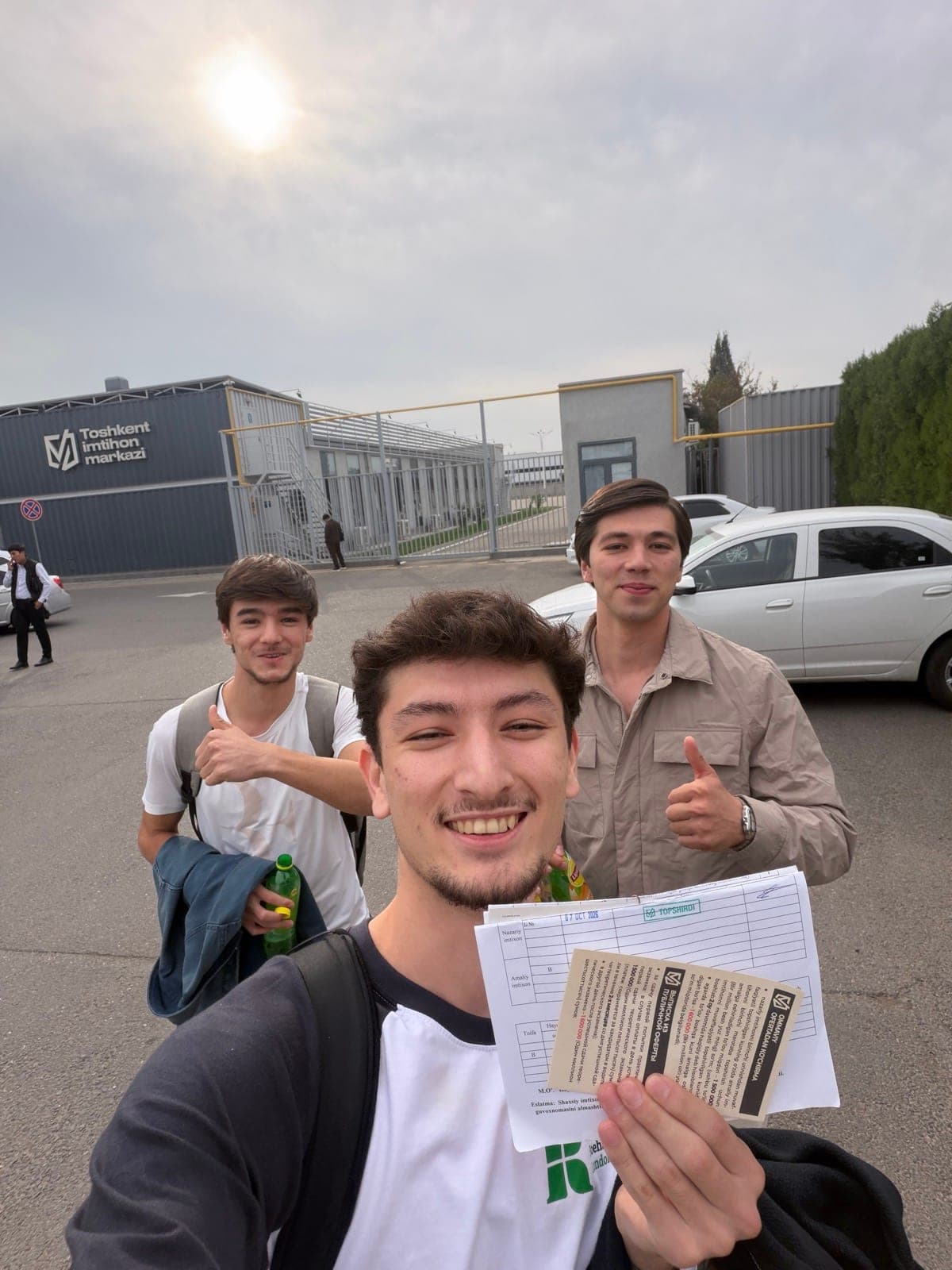
At the exam centre he took his ticket, paid, and went back outside to sit with his two friends for a while. He didn't want to rush. Then he hugged them and went in.
The man next to him asked whether he was there for theory or driving, and why he wasn't practising. His answer: "What I practise now won't teach me anything new. It would only put pressure on me if I got something wrong." The man was amazed.
While the inspector explained the rules, he settled in. The laptop was an ordinary Acer, his seat was the far one by the wall, and the window was open. Still nervous, he told himself: "I'm happy, this is my body reacting to the reward that's coming." Then two quick breaths in, one long breath out. It worked.
He knew the questions and made himself take his time. The first ten were all green. Then one went red, and he told himself one red is fine and kept going. Most of the questions were right of way, the topic he had removed from practice on day one ("I'm 100% sure I know the right-hand rule"). None of them cost him a point.
The one miss was a red car leaving a one-way road at a junction. The answer was "only left"; he picked "all directions". It felt brand new, but it looks like q1133, which he answered correctly twice on 1 October and never saw again. It was the kind of question Night Drive's model kept calling shaky.
By the last question, a tyre tread depth of 1 mm, he knew he had passed even if he got it wrong, and there was music playing in his head. He got it right anyway, and finished before about nine in ten people in the room.
Outside, his friends knew from his face before he said a word, and they hugged him hard. He had waited a year for this.
Seven days
The climb wasn't smooth. 6 October was noisier than 4 October, and three of his last four 20-question mocks sat exactly on the pass line. The real exam came in under all of them.
From 6 mistakes per 20 on the first mock to 1 on the real exam
Mistakes per 20 questions
Day by day
2,160 answers and 17 mocks in 7 h 45 min, over eight days. The biggest day was 619 answers. The exam was first set for 5 October and moved to the 7th.
| Date | Answers | Correct | Minutes | Mocks | What happened |
|---|---|---|---|---|---|
| 30 Sep | 181 | 72% | 57 | 14/20, 17/20 | Platform built from his AvtoPilot history. Right-hand-rule questions removed. Day-zero forecast: 4.6 mistakes per 20, a 13% pass chance |
| 1 Oct | 619 | 76% | 137 | 19/20, 15/20, 14/20, 19/20, 47/50, 41/50 | Twins born (his idea, first twin page at 17:46). The daily meter, numbers and categories, a copy of the real exam screen, the 50-question mock. Pictures from an outside question source turned out to be AI-upscaled and were dropped |
| 2 Oct | 123 | 74% | 25 | none | Short day |
| 3 Oct | 252 | 83% | 49 | none | First day above 80% |
| 4 Oct | 426 | 86% | 83 | 46/50, 45/50 | Steady day |
| 5 Oct | 5 | 80% | 1 | none | The original exam date, moved to 7 October |
| 6 Oct | 525 | 87% | 109 | 47/50, 45/50, 42/50, 18/20, 18/20, 18/20, 16/20 | Built the 20-question exam mode, "Not recovered", the steering-play and tread section and the ladder card. Paired the look-alikes he reported. Not recovered went from 75 to 14 by midnight |
| 7 Oct | 29 | 97% | 4 | none | Morning "not recovered" round, 16 of 16, list empty. Exam: 19 of 20, passed |
The ideas that came from studying
The best idea came from frustration. Two questions looked the same but had different right answers, so learning one undid the other. No roadmap would have produced that. It took sitting down to study for the exam.
Twins
- Where it came from
- 1 October, in his words: "when I learn one, the second one ruins my learning because it has a different correct option"
- What it does
- Shows the look-alike question on the same page and marks the differing words in yellow once both are answered. 287 pairs, found by picture hash, by wording and by agents reading whole topics. He reported 20 of them himself.
- What the data says
- Before twins, look-alike questions trailed the rest of his mock answers by about seven points. After, the two were level at about 89%. The before sample is small: fewer than 40 look-alike answers.
Not recovered
- Where it came from
- 6 October: "only put the questions I got wrong and not recovered"
- What it does
- A list of every miss not yet answered right since. A miss waits an hour before it comes back.
- What the data says
- 75 questions on the evening of 6 October, none on exam morning.
Drop what you know
- Where it came from
- 30 September: "I'm 100% sure I know the right-hand rule"
- What it does
- Hides 77 right-hand-rule questions. Any of them he misses comes back until he gets it right.
- What the data says
- Most exam questions were right of way. None cost a point.
The real exam screen
- Where it came from
- 1 October: "make the mock look exactly like the real exam"
- What it does
- A copy of the exam centre's screen, built from a photo: press an F-key twice to answer, green and red cells, a 25-minute timer.
- What the data says
- 17 mocks on it. Nothing on exam day looked new.
Ladder card
- Where it came from
- 1 and 6 October: "my weak point for sure: M, N1, N2, km/h numbers", then steering play, tread and brake percentages
- What it does
- One card at the top of the home screen: steering play, tread depth and parking-brake slope by vehicle category.
- What the data says
- The exam's last question, a tread depth of 1 mm, came straight off it.
"Today is enough" meter
- Where it came from
- Day one: "a metric that shows today is enough"
- What it does
- A fixed daily target of 450 answers, shown next to the projected exam-day result.
- What the data says
- He cleared it on 1 October (619) and 6 October (525). A projection showed what each extra 100 answers a day was worth.
Notes on his own traps
- Where it came from
- His AvtoPilot history: a third of his misses repeated an old wrong pick
- What it does
- 114 short notes, each written for one exact trap. For q57: a blue town sign means out-of-town limits apply, so a car with a trailer gets 80, not 70.
- What the data says
- q57, wrong 13 times before, answered right in 6 seconds on exam morning.
Ideas the data killed
Three tempting shortcuts were tested on his answers and dropped before they reached the screen:
- Slow right answers mean shaky knowledge. They didn't. Slow right answers held up as well as fast ones.
- Shorter spacing learns faster. Repeats after 5 hours and 2 hours, three sessions a day, gave no gain at the same number of answers. With about 930 questions still open, breadth was the bottleneck, not spacing.
- The longest, most qualified option is usually right. It wins 33% of the time against 29% by chance, and options containing "tashqari" or "Agar" were right only 26% of the time.
The forecast was too pessimistic all week. On the eve of the exam, the model said 2.65 mistakes and a 49% pass chance. His mocks said 2.1 mistakes and about 62%. He made one. For AvtoPilot's readiness number, the lesson is to lean on real mock results once a learner has a few of them.
What goes into AvtoPilot next
His call on 7 October: what won his exam goes to every learner. The 287 twin pairs are already matched to AvtoPilot's full bank of 1,309 questions, so the content is ready. The rest is product work, and none of it is live yet.
- Twins in Daily practice, for everyone. When a question with a look-alike comes up, its twin appears next to it, with the differing words marked.
- Daily practice grows to 20 questions.
- The exam screen rebuilt like the 20- and 50-question mocks: the real exam centre's layout, green and red cells, the timer.
- Measure it: look-alike accuracy against everything else, before and after, across all learners.
The last item decides the rest. Twins closed the gap for one learner, on fewer than 40 answers before the change. Whether it closes for everyone is a question AvtoPilot's own numbers will answer.
All figures come from Night Drive's answer log (30 September to 7 October 2026) and his earlier AvtoPilot history. This is one learner preparing for one exam, so read them as a case, not a study.